Women have always been part of agriculture, though rarely as owners, authors, or formal decision makers. More often, their role appears as continuity. Their labour holds when systems strain. Their knowledge passes quietly from one generation to the next.
Agricultural history is usually told through tools, yields, and ownership. When you read it differently, it is a story of the people who maintained the connections between land and survival. They did this when those systems were fragile.
Agriculture emerged around 10,000 BCE through gradual changes in how humans interacted with plants and landscapes. In many early societies, women were responsible for gathering, food preparation, and storage. This required detailed ecological knowledge: which plants returned year after year, which could be preserved, and which thrived near settlement.
Archaeological evidence from sites such as Abu Hureyra and Jiahu links early cultivation closely to food processing and storage. These were not isolated technical acts, but cumulative, everyday decisions shaped through observation and care. The foundations of agriculture were therefore relational as much as technical.
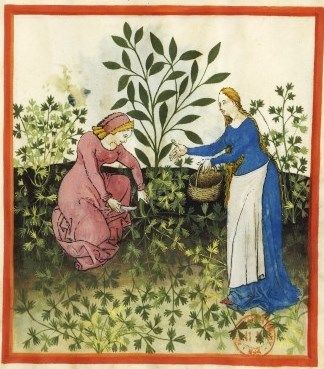
That pattern continued for centuries. In medieval Europe, women worked across planting, harvesting, livestock care, brewing, preservation, and household gardens. Manorial records show women acting as tenants and holding land, particularly after periods of disruption such as the Black Death. Yet agricultural manuals and land records largely excluded their contributions. They categorised work done near the household as natural rather than skilled.
Structural Exclusion and the Changing Land
From the seventeenth century onward, particularly in England and parts of Western Europe, enclosure acts transformed agriculture. Between roughly 1600 and 1850, common land was consolidated into private ownership, fundamentally altering rural economies.
As land became property, farming became increasingly capital intensive. Access to ownership, training, and finance passed through legal and institutional systems dominated by men. Women continued to work in agriculture, especially as seasonal labourers and unpaid family workers, but with reduced autonomy and visibility.
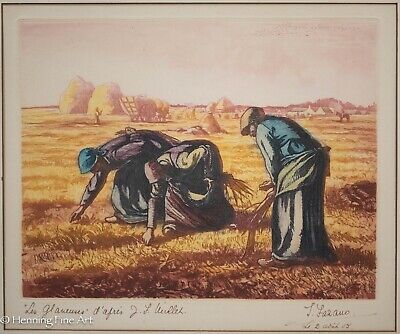
By the nineteenth century, agricultural authority was increasingly defined through ownership, machinery, and formal education. Practical knowledge, shared through community and experience, was devalued. Women still played a central role in day to day farm labor across Britain and Europe.
Crisis and Temporary Recognition
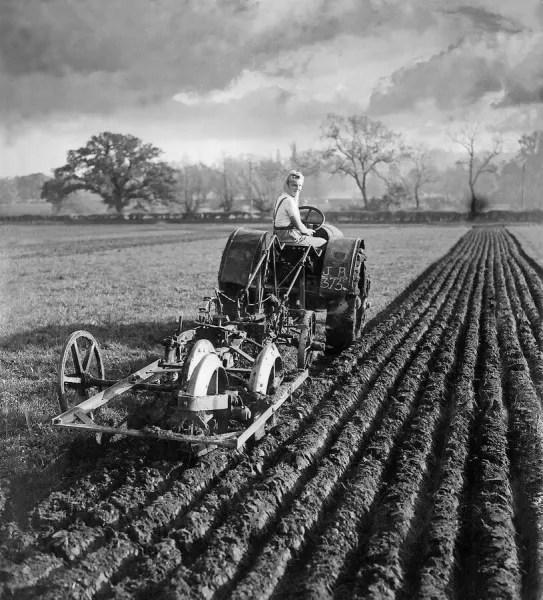
Moments of crisis briefly exposed how dependent food systems were on women’s labour. During both world wars, women maintained agricultural production at scale across Britain, Europe, and North America. Once those crises passed, their work was again reframed as temporary rather than expert.
Contemporary Food Systems and Inequality
In the late twentieth and early twenty first centuries, women have remained central to food production globally. They have played a significant role in small-scale agriculture across Africa. They are also vital in subsistence farming in South Asia, Southeast Asia, and Latin America.
Women make up a substantial proportion of the agricultural workforce in these regions. This is according to data from the Food and Agriculture Organization of the United Nations. However, they own significantly less land and receive a smaller share of agricultural credit and extension services. Today, women remain central to food production globally, particularly in small scale and subsistence agriculture. Data consistently shows that when women have equitable access to land, credit, and training, yields and resilience improve. Yet structural barriers persist, leaving their contributions under recognised and their exposure to risk higher.
In recent decades, many women have returned to farming. They use regenerative and community-based models. These models emphasise long-term soil health, adaptation, and continuity. These approaches draw on forms of knowledge long embedded in women’s agricultural labour. This includes observation, intergenerational learning. It also involves care for systems over time.
This is not rediscovery. It is recognition.
The history of women in agriculture is not a parallel story. It is central to how food systems have endured. Women have repeatedly acted as the connective tissue between land, labour, and survival. Their work has often been invisible precisely because it sustained continuity rather than rupture.
They did not always own the land. But they kept the system standing.
 Women build bridges